
The Western Wall (Kotel)
הכותל המערבי
The Western Wall, known in Hebrew as the Kotel, is the most sacred place in Judaism. It is a limestone retaining wall from the Second Temple complex, built by King Herod around 19 BCE. When the Romans destroyed the Temple in 70 CE, this western section of the outer wall survived. For nearly two millennia, Jews have gathered here to pray, mourn the destruction of the Temple, and celebrate. The massive stones — some weighing over 500 tons — stand as a testament to ancient engineering and enduring faith. The plaza before the wall is open 24 hours a day, 365 days a year, and is divided into men's and women's prayer sections.
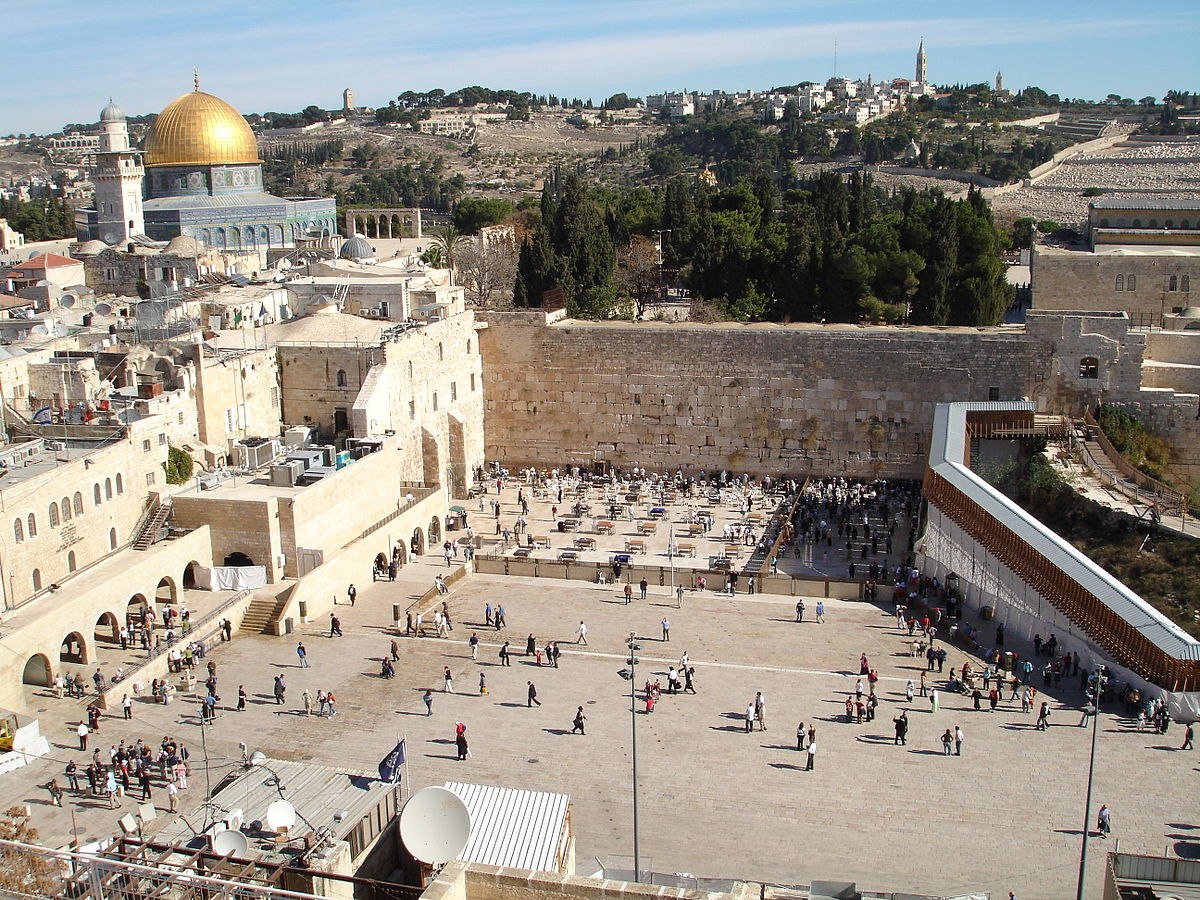
Wikimedia Commons

Sustructu stitched by Marku1988 This image was created with Hugin. (CC BY 3.0)
Don't Miss
- Place a written prayer in the cracks between the ancient stones
- Visit the Western Wall Tunnels for an underground tour along the full length of the wall
- Experience a Friday evening Kabbalat Shabbat service at sunset
- See the massive stones of the original Herodian construction up close
- Visit the archaeological park at the southern wall
A Living Place of Prayer
The Western Wall is not a museum — it is an active, vibrant place of worship visited by millions each year. On any given day you'll see soldiers in uniform, bar mitzvah celebrations, tourists of every nationality, and ultra-Orthodox Jews swaying in prayer. On Friday evenings, the plaza fills with singing and dancing as groups welcome the Sabbath. On Tisha B'Av, the fast day commemorating the Temple's destruction, thousands sit on the ground reading the Book of Lamentations by candlelight. The tradition of placing written prayers between the stones dates back centuries; today, even emails and faxes are printed and placed in the wall on behalf of people around the world.
The Western Wall Tunnels
Beneath the modern street level, the Western Wall continues for over 480 meters — far longer than the exposed 57-meter section visible in the plaza. The Western Wall Tunnels tour takes you underground along the full length of the wall, revealing layers of history from the Herodian, Roman, Mamluk, and Ottoman periods. The highlight is the Western Stone, one of the largest building stones in the ancient world at 13.6 meters long and weighing an estimated 570 tons. You'll also see an ancient water aqueduct, a Hasmonean-era water channel, and the closest accessible point to where the Holy of Holies once stood.
Visitor Information
Hours
Open 24/7, every day of the year
Admission
Free (Western Wall Tunnels tour: ~35 NIS, advance booking required)
Duration
1-2 hours (add 75 minutes for the Tunnels tour)
Best Time to Visit
Early morning or late evening for fewer crowds. Friday evening for the Shabbat atmosphere.
How to Get There
- Walk from Jaffa Gate through the Jewish Quarter
- Bus to Dung Gate (closest entrance)
- Light rail to City Hall, then walk
Tips
- Dress modestly — shoulders and knees covered
- Men should wear a head covering (paper kippot available at the entrance)
- Photography is allowed except on Shabbat and holidays
- Book Western Wall Tunnels tours in advance — they sell out quickly
Jerusalem Wall Art
Works Inspired by Jerusalem


More Things to Do in Jerusalem
Walk the Old City's Four Quarters
Half day to full day · Free to walk (individual sites may have fees)
Temple Mount & Dome of the Rock
1-2 hours · Free
Church of the Holy Sepulchre
1-2 hours · Free
Mount of Olives
2-3 hours for the full walk from top to bottom · Free (some churches may have small entrance fees)
Yad Vashem Holocaust Memorial
3-4 hours minimum · Free
City of David Archaeological Park
2-3 hours · ~29 NIS adult (various combo tickets available)
Mahane Yehuda Market
1-2 hours · Free to enter (bring cash for purchases)
Israel Museum & Shrine of the Book
3-4 hours · ~54 NIS adult
Tower of David Museum
1-2 hours (museum), 45 minutes (night show) · ~40 NIS adult (museum), ~55 NIS (night show, separate ticket)